|
|
|
|
|
|
|
|
|
The White Dragon
|
|
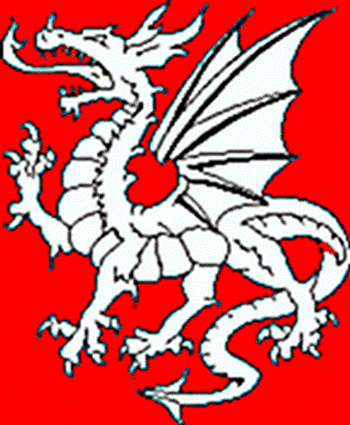
The White Dragon is recorded as being the emblem carried by
Hengest and Horsa as they established the nation of England out of lowland
Britain. As such, it is the original
and most authentic emblem of the Anglo Saxon English people and one that is
being revived today. An old legend is said to have prophesised English victory
over the Celtic Welsh in the struggle for land. It tells of an underground lake in which
two dragons slept; one white (English) and one red (Welsh). When they awoke, they started fighting and
the red dragon was overcome by the white one, symbolically representing an
English victory over the Welsh. |
|
The White dragon came to be particularly associated with
the Kingdom of Wessex, especially in the dark days of the Viking invasions
when this remained the only Kingdom under English control. It was the emblem carried by King Alfred
when he defeated the Danish armies at the battle of Edington. It was the emblem carried by King Athelstan
when he defeated a combined army of Scots, Welsh, Irish and Vikings at the
battle of Brananburgh. It was also the emblem carried by King
Harold II when he defeated the Norwegians at the battle of Stamford bridge
and when catastrophe struck and he was in turn defeated by the Duke of
Normandy at Hastings. The White Dragon
flag is depicted on the Bayeux tapestry. It is still the emblem of Wessex, but is in reality the
emblem of the whole Anglo Saxon people.
It is a symbol of our identity and history, of our determination to
survive and prosper in an increasingly strange and changing world. |
||